

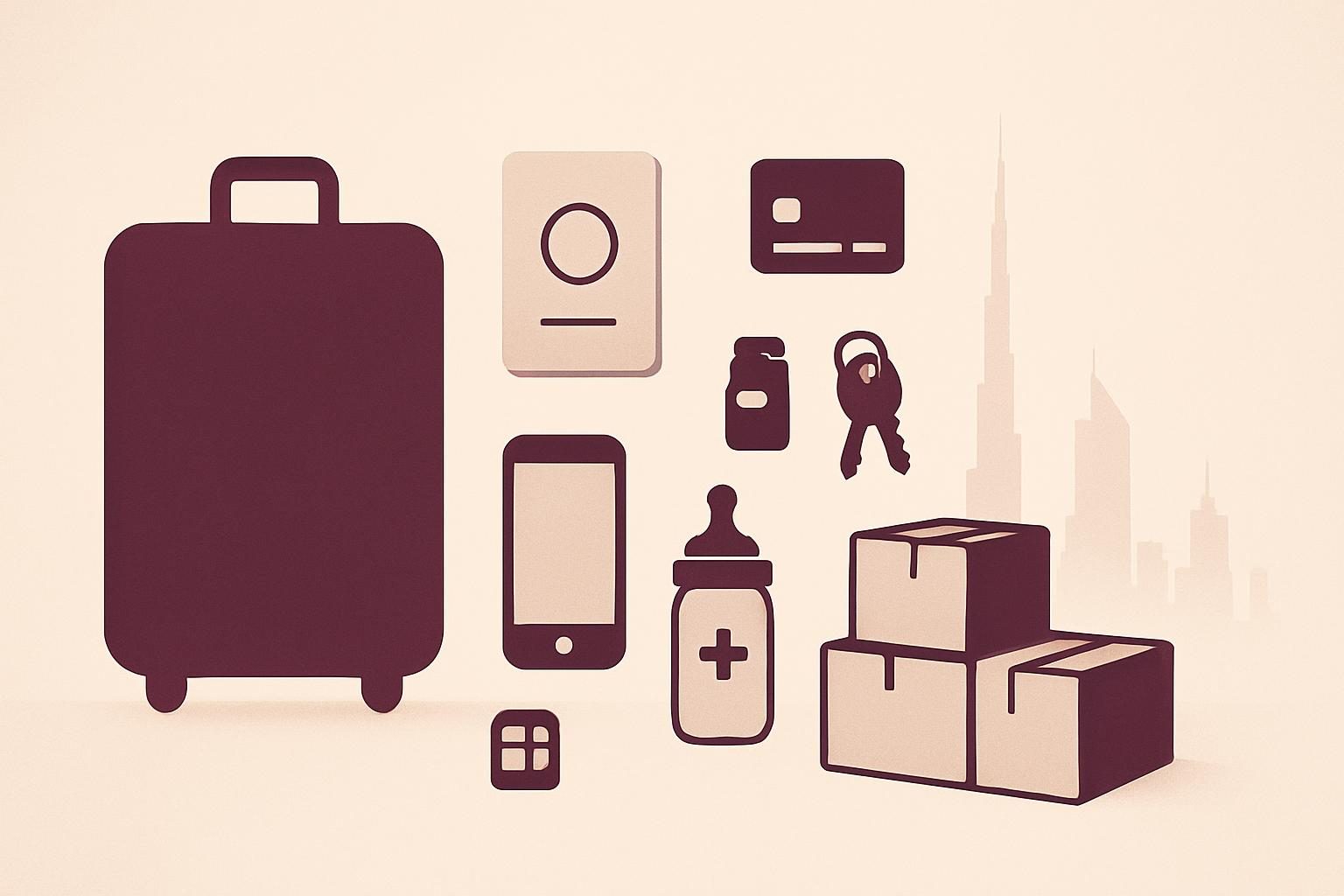
Start with the first week, not the inventory list
If your Dubai shipment is still in transit, the safest approach is not to pack by room. Pack by when you will need each item. Keep a small carry layer, a separate air-freight layer if you are using one, and a later-shipment layer for furniture and anything you can live without for a few weeks. That matters most for families, because the first days in Dubai are usually full of visa steps, housing handovers, school admin and setup jobs that all happen before the container arrives.
For a practical guide to the bigger shipping decision, use the shipping furniture to Dubai planning guide as context. This article focuses on the narrower question of what should travel with you so the first week still works.
The packing rule that avoids most first-week problems
Pack for access, not for rooms. Anything you may need in the first 7 to 14 days should be treated as a separate category, even if it belongs in the same bedroom or office as everything else. That includes work equipment, children’s essentials, medicines, documents, chargers, basic clothing, toiletries and anything needed for sleep or school routines.
Use three packing layers
| Layer | What goes in it | Why it matters |
|---|---|---|
| Carry with you | Passports, visa copies, Emirates ID related documents, tenancy papers, keys, cards, cash buffer, medicines, phone, laptop, chargers, one change of clothes, toddler essentials | These are the things you may need on arrival, at the airport, or for the first appointments |
| Air-freight or fast shipment | Work accessories, a few kitchen basics, children’s bedding, favourite items, seasonal clothing, small electronics | Useful if you need them soon but not immediately in the first hours |
| Later shipment | Furniture, spare household items, archive boxes, decor, duplicate kitchenware, off-season items | These can wait until you are settled in the rental and utilities are running |
What to pack for first weeks in Dubai
Use this checklist to decide what should stay with you rather than going into the slow shipment.
1. Documents and identity items
- Passports for everyone travelling
- Visa paperwork and copies of key approvals
- Birth certificates, marriage certificate and school records if relevant
- Tenancy paperwork, offer letters or employer letters if they are part of your move
- Insurance documents and emergency contact details
2. Work essentials
- Laptop and charger
- Adapters and any specialist cables
- Headphones, mouse and work accessories
- Portable hard drive or storage you use often
- Anything you need for the first week of remote work, onboarding or client calls
3. Medicines and health items
- Prescription medicines with clear packaging and supporting paperwork if needed
- Basic first-aid items
- Glasses, contact lenses and spares
- Children’s medicines, thermometers and comfort items
4. Children’s first-week kit
- Favourite comfort toy or blanket
- A few changes of clothes
- Sleep items that help with the first few nights
- Snacks and feeding items if age appropriate
- School or nursery paperwork if the child is starting soon
5. Sleep and daily comfort
- Bedding for the first nights
- Basic towels
- Toiletries
- Enough clothing for a week, including workwear and casual wear
- One or two household items that make temporary accommodation workable
6. Setup items for Dubai admin
- Phone and SIM related items
- Bank cards and account documents
- Copies of proof of address if you have them
- Anything you need for DEWA, internet or housing handover appointments
What usually gets packed into the wrong shipment
The common mistake is to label boxes by room and assume that covers the first week. It does not. A nursery box can contain the cot fittings you need on day one. An office box can hold the laptop accessories you need for your first meeting. A kitchen box may hide the only kettle or bottle steriliser you planned to use immediately.
If you are moving to Dubai with family, that mistake becomes more visible. Parents often arrive with a toddler and then discover that the cot fittings, comfort toy and work laptop accessories are all in the container. The move is still possible, but the first days become more expensive and more tiring because you now have to replace or borrow items you already owned.
How to build your own packing decision worksheet
Use this simple test for every item:
- Would I need this in the first 72 hours?
- Would I need this before the shipment could reasonably arrive?
- Would replacing this in Dubai be slow, inconvenient or costly?
- Would missing this affect work, children’s routines, sleep or basic admin?
- Does airline baggage allowance change where this should go?
If the answer is yes to any of the first four questions, the item probably should not be buried in the later shipment. If airline rules matter, check those separately before you fly. Do not assume the same item can travel in hand luggage, checked luggage and air freight without review.
What to separate before you seal the boxes
- Anything needed for the first night in temporary accommodation
- Anything needed to start work within the first few days
- Anything needed for nursery or school drop-off routines
- Any medicines, documents or devices you cannot easily replace
- Any item that is hard to source quickly in Dubai if it goes missing
Practical example: a family move from the UK
A couple moving with a toddler may think the nursery room box can go straight into the container because the room is fully packed. A better plan is to pull out the cot fittings, sheets, baby monitor, favourite toy, nappies, a few snacks, changing items and the parents’ laptop chargers. Those stay with the family or move faster than the main shipment. The rest of the nursery can travel later without disrupting the first week.
How this fits with the rest of your Dubai move plan
This checklist only works if it sits inside the wider relocation sequence. Your visa route can affect when you can open a bank account, sign a tenancy, get utilities started and organise school places. If you are still mapping the full move, review the moving to Dubai with family checklist and the first 30 days in Dubai checklist so your packing decisions match the dates that matter.
FAQs
What should I pack separately for the first weeks in Dubai?
Keep documents, medicines, work devices, chargers, a few days of clothing, children’s comfort items and anything needed for sleep or admin outside the slow shipment. If an item affects your first few days, it should not be buried in a box that might arrive later. Treat the first week as its own packing category.
Should I pack children’s items with the main Dubai shipment?
Only the non-urgent items. Keep anything needed for sleep, feeding, comfort, school or nursery routines close to hand. That usually means a separate family essentials bag or box. For young children, even a missing cot fitting or favourite toy can make the first week harder than it needs to be.
How do I decide what goes in carry-on versus freight?
Use timing and replacement difficulty. Carry-on should cover passports, medicine, key documents, one or two days of essentials and devices you cannot lose. Faster shipment can cover items you need soon after arrival. The slow container is best for furniture and household extras. Check airline baggage rules separately before you decide.
What if I am moving to Dubai for work and need my laptop immediately?
Do not assume the laptop bag can be left in the shipment because it is listed under the office room. Keep the laptop, charger and any important accessories with you or in a faster layer. If your first week includes onboarding, meetings or remote work, those items are part of your arrival plan, not your storage plan.
When should I get an individual assessment for shipping belongings to Dubai?
Get a more detailed assessment if you are moving with children, have medical items, are on a tight arrival timeline or are unsure whether to ship furniture at all. Household size, visa timing, temporary accommodation and what you already have in Dubai all affect the decision. If the shipment plan changes your first-week living setup, it deserves a closer review.
Build your Dubai move plan around the dates that matter.
Use the Dubai move planner to organise your dates, documents and next decisions.